
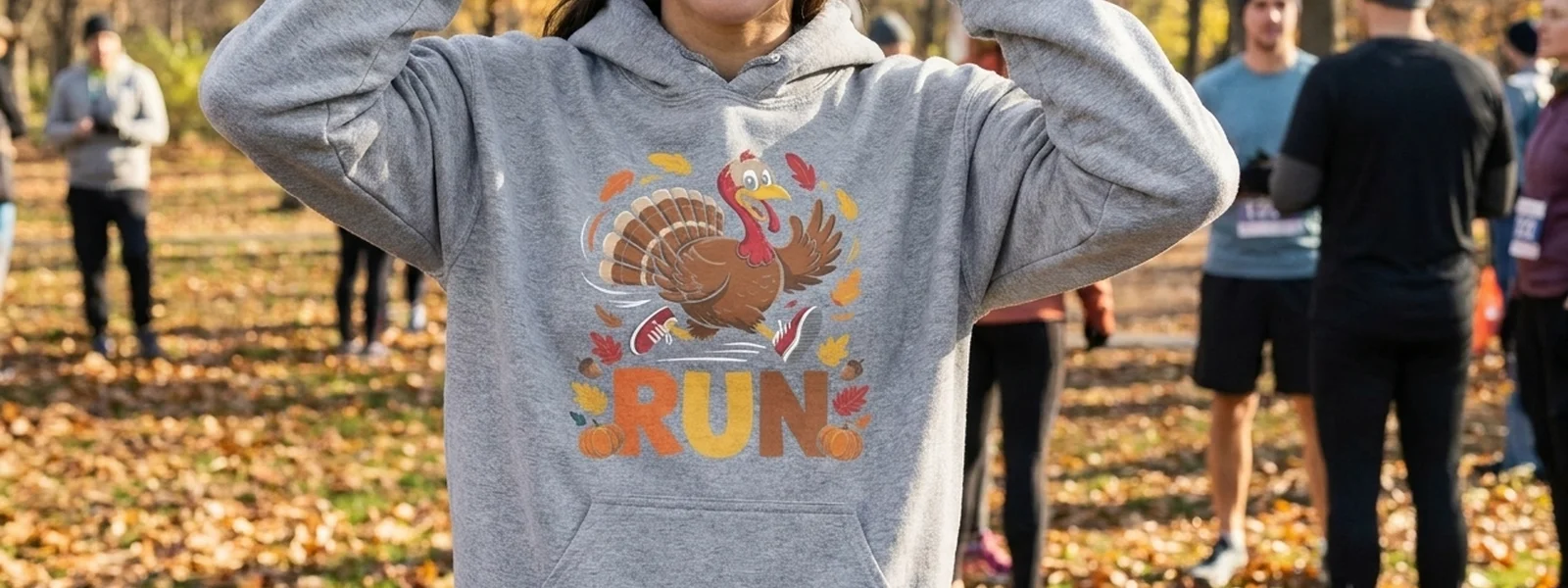
The alarm blares. It’s still dark, a crisp bite in the air, and that first cup of coffee is already brewing. Race morning. For many Trotters, the Thanksgiving Day Turkey Trot isn’t just a tradition; it’s the annual test of grit, gratitude, and good layering strategy. You’ve put in the miles, you’ve earned the meal – now, let’s make sure you’re dressed for success. One of the biggest questions facing any Trotter, from the seasoned veteran aiming for a PR to the first-timer pushing a stroller, is: what do I wear? Mastering your cold-morning layering and understanding your turkey trot weather layers is key to a comfortable, strong race.
November weather is notoriously unpredictable. One year, it’s a balmy 50 degrees at gun time; the next, you’re breathing ice crystals at 28 degrees. Showing up prepared isn’t just about having the right shoes; it’s about having the right race day outfit strategy. Let’s break down how to dress for anything the fourth Thursday in November throws at you.
The 20-Degree Rule: Dress for 20 Degrees Warmer Than It Feels
This is the golden rule for cold weather layering running. Before you even think about fabrics, remember this: your body generates a surprising amount of heat once you start moving. If it’s 35 degrees Fahrenheit outside, you should dress as if it’s 55 degrees. This often means you’ll feel a little chilly at the start line – that’s normal, and it’s actually a good sign. It means you won’t overheat a mile in.
Feeling cold at mile zero is a badge of honor for many Trotters. It means you’ve got your layering dialed in. Overdressing is a common mistake that leads to discomfort, chafing, and a heavy, sweaty feeling that can derail your pace. Trust the rule, embrace the initial chill, and know that your body will warm up quickly once you hit your stride.
Base Layers: Wicking Sweat Away From Your Skin
Your base layer is the foundation of your turkey trot weather layers strategy. Its primary job is to wick sweat away from your skin, keeping you dry and preventing that clammy, cold feeling that can set in when moisture evaporates too slowly. This is where moisture wicking layers truly shine. Cotton is a no-go for this layer – it absorbs sweat and stays wet, chilling you to the bone.
Opt for synthetic fabrics like polyester or polypropylene, or natural options like merino wool, which performs well even when damp. A good base layer should fit snugly against your skin without being restrictive. For serious Trotters, our
offers technical fabrics designed to move with you and keep you dry. Consider a sleek, performance-cut tee like our as your first line of defense against the cold.Mid Layers: Adding Warmth Without Bulk
The mid layer provides insulation. It traps air close to your body, adding warmth without excessive bulk that can hinder your movement. Depending on the temperature, your mid layer could be a lightweight long-sleeve tee, a thin fleece, or a technical quarter-zip. The goal is to add warmth in a way that’s easy to shed if you start to overheat.
For many fall races, a simple long-sleeve tee is the perfect mid-layer, offering just enough extra warmth. Our range of
provides excellent options for this, allowing you to show off your race-day spirit while staying comfortable. A design like ourHuffin' & Puffin' For That Stuffin' T-Shirt
Outer Layers: Protection from Wind and Precipitation
Your outer layer is your shield against the elements. It’s designed to protect you from wind, rain, or snow while still allowing some breathability to prevent you from getting too warm. For most Turkey Trots, a lightweight, wind-resistant jacket or vest is sufficient. Look for something that can be easily tied around your waist if conditions improve or if you simply warm up more than expected.
Remember, the outer layer isn't about adding significant warmth, but rather about protection. If the forecast calls for cold and windy conditions, a light jacket over your base and mid-layers will make a huge difference. For pre-race warmth or a quick change post-finish, our
are essential for staying cozy before and after you cross the line.Head, Hands, and Feet: Don't Forget the Extremities
These often-overlooked areas can make or break your comfort during a cold-morning Trot. Your head is a major source of heat loss, so a lightweight beanie or headband can be incredibly effective. Gloves are also crucial for keeping your hands warm in chilly temperatures, especially during the first mile or two.
For your feet, opt for moisture-wicking socks – again, no cotton! Wool or synthetic blends will keep your feet dry and blister-free. Thin socks are generally better than thick ones, as they prevent your feet from overheating and swelling. Don’t underestimate the power of these small additions to your race day outfit strategy.
The Race Day Outfit Strategy: Putting It All Together
Now, let's talk practical application for dressing for fall race conditions. This isn't just about throwing on clothes; it's about a calculated approach to keep you performing optimally.
- 40-50°F (Cool to Mild): A single long-sleeve base layer, or a short-sleeve performance tee with arm sleeves. Consider light gloves if you get cold hands. Our makes a fun statement on a long-sleeve blank in this weather.
I Trained Zero Days For This T-Shirt
- 30-40°F (Chilly): A moisture-wicking base layer (long-sleeve), plus a light mid-layer (like a thin long-sleeve or quarter-zip). Beanie and gloves are highly recommended.
- Below 30°F (Cold): A warm, moisture-wicking base layer (long-sleeve), a mid-layer (fleece or thicker long-sleeve), and a wind-resistant outer layer. Definitely a beanie, gloves, and possibly a neck gaiter.
Always test your layering strategy during training runs. What feels right for one Trotter might be too much or too little for another. Pay attention to how your body responds to different temperatures and effort levels. Remember, the goal is to be comfortable, not necessarily warm, throughout the entire race. You want to feel slightly underdressed at the start, knowing you'll warm up.
Post-Race Comfort: The Reward for Your Miles
The moment you cross the finish line, your body’s heat production drops significantly. This is when you want to get into dry, warm clothes as quickly as possible. Have a warm, dry change of clothes waiting for you – especially a fresh top and bottom. A cozy
or a plushTurkey Trot Hoodies
Ready for Race Day?
From the first nervous sips of coffee to the triumphant strides across the finish line, your Turkey Trot is an experience to savor. Don't let unpredictable November weather detract from it. By carefully considering your turkey trot weather layers, you'll be able to focus on your pace, enjoy the crisp morning air, and truly earn that post-race pie. Whether you’re chasing a PR or enjoying a leisurely stroll with the family, the right gear makes all the difference.
For more insights on choosing the best race-day apparel, check out our guide on Performance Tee or Singlet? A Persona-Based Gear Guide. Gear up for your best race yet, Trotters!

Published by Turkey Trot Shirts
Cross the line, then carve the bird.
Frequently Asked Questions
What is the '20-degree rule' for running?
The 20-degree rule suggests dressing as if the temperature is 20 degrees Fahrenheit warmer than it actually is. Your body generates significant heat during exercise, so feeling slightly chilly at the start line is ideal to prevent overheating once you get moving.
Why is cotton not recommended for base layers in cold weather?
Cotton absorbs moisture like sweat and holds it against your skin, making you feel cold and clammy as it evaporates. For effective cold weather layering, opt for moisture-wicking fabrics like synthetics (polyester, polypropylene) or merino wool that pull sweat away from your body.
Should I wear new running gear on race day?
It's generally best to avoid wearing brand new gear, especially shoes or socks, on race day. Always test out new clothing and shoes during training runs to ensure they are comfortable and won't cause chafing or blisters during the actual event.
What should I do with my layers if I get too warm during the race?
If you find yourself overheating, you can usually shed an outer layer (like a light jacket or vest) and tie it around your waist. Many races also have designated areas for discarding clothing, which is often collected and donated to charity.
Are hats and gloves really necessary for a Turkey Trot?
Yes, hats and gloves can make a huge difference, especially when the temperature drops below 40°F. Your extremities and head are major points of heat loss, so covering them helps your body maintain a comfortable core temperature throughout your run.
What should I wear immediately after finishing my Turkey Trot?
After crossing the finish line, your body temperature will drop quickly. It's crucial to change into dry, warm clothes as soon as possible. Have a dry change of top, bottom, and socks ready, perhaps a cozy hoodie or sweatshirt, to prevent getting chilled while you cool down.
Lace up. Get the inside lane.
New designs, race-week shipping cutoffs, and Trotter-only deals -- straight to your inbox.