
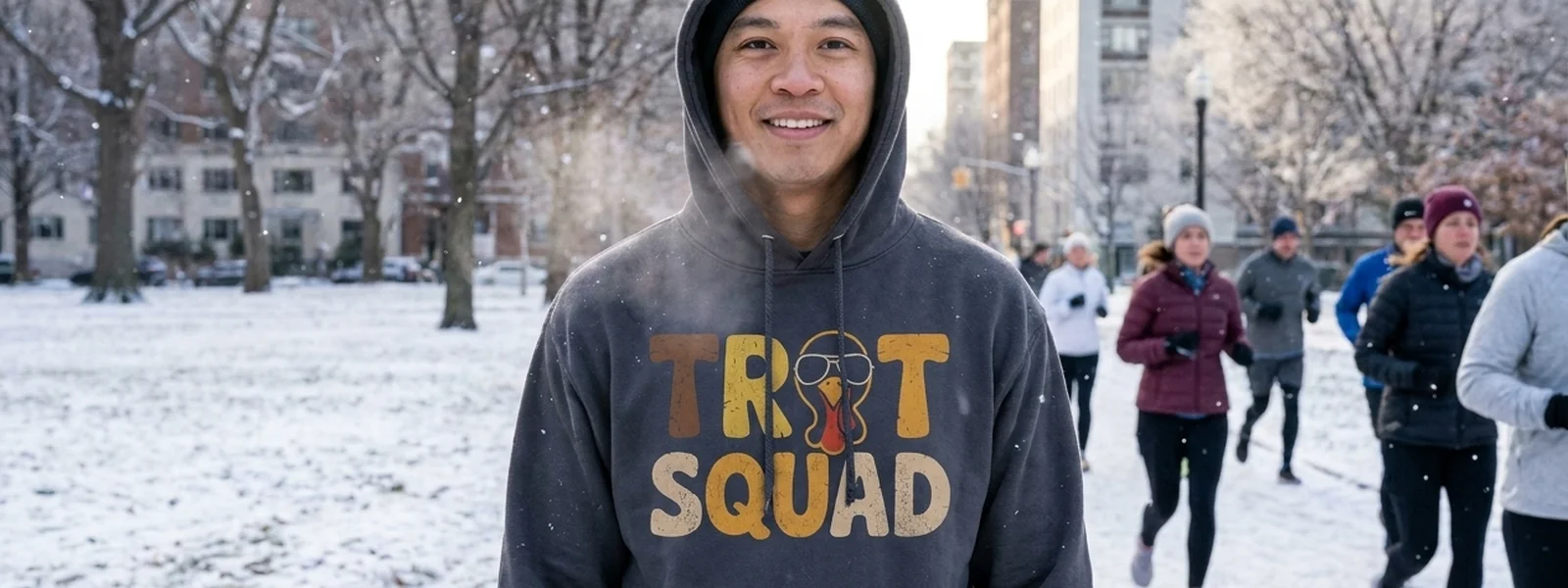
The alarm blares. It’s still dark, maybe a little icy outside, and the coffee is already brewing. That’s race morning for a Turkey Trotter, especially when the forecast calls for a truly cold turkey trot. While some lucky Trotters enjoy mild autumn air, others face conditions that would make a polar bear reconsider. But for us, that chill is part of the challenge, the grit, the story.
We started Turkey Trot Shirts because we know that feeling. That 35-degree parking lot at 7:42 a.m. on the fourth Thursday in November, stretching out before the 5K, wishing for a shirt that actually fit and performed. We're here to make sure you're geared up, no matter how low the mercury drops. So, grab another coffee and let's dive into which cities consistently host the coldest Thanksgiving races, and how to conquer them.
Ranking the Chilliest: Cities Where the Mercury Drops on Thanksgiving
When you're lining up at the start, that crisp air can quickly turn into a biting wind. Some cities are almost guaranteed to deliver a truly cold turkey trot experience. We're talking about average lows that hover around freezing, or even dip well below.
Minneapolis, Minnesota
It's no surprise that the Land of 10,000 Lakes often ranks high on the list for coldest Thanksgiving races. With average November lows in the 20s Fahrenheit, Trotters here are seasoned pros at cold-weather running. The crisp air off the Mississippi River can make those early miles feel even colder, but the vibrant running community keeps spirits high.
Anchorage, Alaska
While perhaps not as many organized Turkey Trots as the lower 48, any Thanksgiving run in Anchorage is going to be an epic cold-weather adventure. Temperatures are often in the teens or single digits. This is where your Performance Turkey Trot Apparel truly earns its stripes, turning a challenging run into a badge of honor.
Denver, Colorado
The Mile High City offers stunning views, but also a brisk start to Thanksgiving. With high elevation and often dry, cold air, Denver Trotters frequently face temperatures in the 20s. The sun can be intense, but don't let that fool you; the shade and wind can be brutal. Proper layering is non-negotiable for this city turkey trot weather.
Chicago, Illinois
The Windy City lives up to its name, especially in late November. While average temperatures might seem moderate compared to Minneapolis, that lake-effect wind whipping off Lake Michigan can drop the "feels like" temperature significantly. Chicago's Turkey Trots are legendary, and so is the need for serious winter running apparel.
Boston, Massachusetts
Historic Boston often serves up a classic New England chill. Coastal winds and often damp conditions make for a penetrating cold. Trotters here know that a little rain or sleet is just part of the tradition, and finishing strong means you've truly earned that post-race warmth.
Buffalo, New York
Another Great Lakes city, Buffalo is no stranger to early winter weather. Snow is a real possibility, and freezing temperatures are common. If you're running a Turkey Trot here, you're not just running a race; you're embracing the elements. It's a testament to the dedication of Trotters nationwide that these events thrive despite the chill.
Even if your local Trot isn't on this list, a sudden cold front can make any Thanksgiving race a chilly one. Always check that race-day forecast, because the weather can change faster than your split times.
Preparing for Sub-Freezing Starts: Essential Gear and Warmups
Facing a truly cold turkey trot requires more than just willpower; it demands smart preparation. Your race-day strategy starts long before the gun fires, especially when temperatures dip below freezing. This isn't just about comfort; it's about safety and performance.
The Gear That Makes a Difference
- Headwear: A warm beanie or headband is crucial. You lose a lot of heat through your head, and protecting your ears from the biting wind can make a huge difference in your overall comfort.
- Gloves or Mittens: Your fingers are often the first to feel the cold. Lightweight running gloves are usually sufficient, but for extreme cold, mittens offer better insulation. Consider a pair that allows you to easily adjust your watch or access a gel.
- Socks: Opt for merino wool or synthetic blend socks. Cotton will get wet and stay wet, leading to blisters and cold feet. A good pair of moisture-wicking socks is essential winter running apparel.
- Base Layer: This is your foundation. A snug, moisture-wicking base layer (long-sleeve if it's truly cold) will pull sweat away from your skin, preventing that clammy, cold feeling. Our
performance-ready designs like the 5k On Turkey Day Running Turkey T-Shirt are built for Trotters who prioritize comfort and speed, even in the cold.
- Footwear: While waterproof shoes aren't always necessary, ensure your running shoes have decent traction, especially if there's any chance of frost or light snow on the course.
Dynamic Warmups for a Cold Start
A proper warmup is always important, but even more so when your muscles are cold. Instead of static stretching, focus on dynamic movements that get your blood flowing.
- Light Jogging: Start with a gentle jog for 5-10 minutes. This gradually raises your core temperature.
- Leg Swings: Forward and backward, side to side. Keep them controlled.
- Arm Circles: Big, sweeping circles to warm up your shoulders and upper body.
- High Knees & Butt Kicks: Short bursts to activate your leg muscles.
- Strides: A few short, progressive accelerations to wake up your fast-twitch fibers.
Finish your warmup about 5 minutes before gun time, then head to the start line. Keep moving gently until the race begins to maintain that warmth.
Layering Strategies for Extreme Cold: Don't Just Survive, Thrive
When the city turkey trot weather turns truly frigid, layering is your best friend. It's not about piling on everything you own; it's about strategically combining pieces to trap warmth, wick sweat, and protect you from the elements. The goal is to feel slightly cool at the start, knowing your body will warm up quickly once you get moving.
The Three-Layer Rule for Trotters
This tried-and-true method is perfect for layering for freezing race conditions:
- Base Layer (Wicking): This is against your skin. Its job is to move sweat away from your body to keep you dry. Synthetics (polyester, nylon) or merino wool are ideal. Avoid cotton at all costs, as it absorbs moisture and will make you cold. Consider a lightweight long-sleeve tee as your base.
- Mid Layer (Insulating): This layer provides warmth. A fleece or a thicker long-sleeve running top works well. The goal is to trap warm air close to your body. On truly bitter days, a thin quarter-zip or a performance long-sleeve like our
Huffin' & Puffin' For That Stuffin' T-Shirt (available in various cuts) can be a great option over your base.
- Outer Layer (Protective): This is your shield against wind, rain, or snow. A lightweight, wind-resistant running jacket is perfect. It should be breathable enough to prevent you from overheating, but tough enough to block the elements. For most Turkey Trots, a windbreaker is sufficient. For extreme cold, a slightly more insulated, water-resistant jacket might be needed.
Adjusting on the Go
As you warm up during the race, you might find yourself needing to shed a layer. Many Trotters tie a mid-layer around their waist or plan to toss an old, inexpensive outer layer at a water station (which often collects them for charity). Always remember, it's better to start a little cold than to overheat early in the race.
Don't forget your lower half! Running tights or insulated running pants are key for leg warmth. If it's just cold and not extreme, a good pair of running tights might be enough. For brutal conditions, consider fleece-lined tights or a pair of windproof pants over your tights.
Post-Race Warmth: The Hoodie You'll Reach for Immediately
You've crossed the finish line. Your chip time is in. The endorphins are flowing, and you've earned that meal. But now, it's crucial to get warm quickly. After pushing hard in a cold turkey trot, your body temperature can drop rapidly, especially if your layers are damp with sweat.
This is where the post-race strategy kicks in. Have a dry, warm layer ready and waiting. There's nothing quite like peeling off those sweaty race clothes and pulling on something soft and cozy. A warm hat and gloves should also be within arm's reach.
For many Trotters, the ultimate post-race essential is a great hoodie. Our Turkey Trot Hoodies are designed for exactly this moment: that immediate comfort and warmth after you've conquered the course. Imagine pulling on a soft, thick layer that wraps you in comfort, instantly chasing away the chill. Designs like our Funny Turkey Face Thanksgiving T-Shirt (available on our hoodies) let you celebrate your accomplishment with a bit of humor, while staying perfectly warm.
It’s not just about comfort; it’s about recovery. Keeping warm helps your muscles relax and aids in the cool-down process. Plus, it just feels good to be toasty when you're celebrating with fellow Trotters and thinking about the feast ahead.
Whether you're sipping hot coffee or heading straight for the car, that go-to hoodie or
crewneck from our Turkey Trot Sweatshirts collection is your reward for braving the elements and earning every single bite of that Thanksgiving meal.
Embrace the Chill, Earn the Meal
Running a Turkey Trot in the cold is a unique experience. It adds an extra layer of challenge, a deeper sense of accomplishment, and an even greater appreciation for that warm post-race meal. Whether you're facing down the freezing winds of a major city or just a surprisingly brisk morning in your hometown, being prepared makes all the difference.
So, check that forecast, layer up smart, and get ready to tackle whatever the Thanksgiving morning weather throws your way. The satisfaction of crossing that finish line, especially after a truly cold turkey trot, is unparalleled. You've trained, you've run, and now you truly deserve that pie.
For more insights into great race locations, check out our related article, 10 Turkey Trots to Run Once in Your Life (The Bucket List Edition). Or if you're planning a group outing, read 5 Family-Friendly Turkey Trots Worth a Road Trip to find your next adventure.

Published by Turkey Trot Shirts
Cross the line, then carve the bird.
Frequently Asked Questions
Which cities typically have the coldest Turkey Trots?
Cities like Minneapolis, Anchorage, Denver, Chicago, Boston, and Buffalo are known for consistently low temperatures on Thanksgiving morning. These locations often present challenging conditions for Trotters, making proper gear essential.
What is the most important gear for a cold Turkey Trot?
Essential gear includes a warm hat or headband, gloves or mittens, and moisture-wicking socks (avoid cotton). A good base layer is crucial to keep you dry and regulate body temperature. Don't forget proper footwear with decent traction.
How should I layer for a freezing race?
Follow the 'three-layer rule': a wicking base layer against your skin, an insulating mid-layer (like fleece), and a protective outer layer (wind-resistant jacket). This combination helps trap warmth while allowing sweat to escape, preventing you from getting cold.
What kind of warm-up is best for cold weather running?
Focus on dynamic stretches and light aerobic activity rather than static stretching. A 5-10 minute jog, followed by leg swings, arm circles, and high knees, will gradually raise your core temperature and prepare your muscles for the cold.
Why is a hoodie important after a cold Turkey Trot?
After crossing the finish line in cold conditions, your body temperature can drop quickly. A warm, dry hoodie or sweatshirt provides immediate comfort and helps your body regulate its temperature, aiding in recovery and preventing a post-race chill.
Lace up. Get the inside lane.
New designs, race-week shipping cutoffs, and Trotter-only deals -- straight to your inbox.